I’m fine
Category
Audio-reactive installation / Physical computing / Projection
Tools
TouchDesigner · Arduino · Audio analysis · Projection mapping
/
/
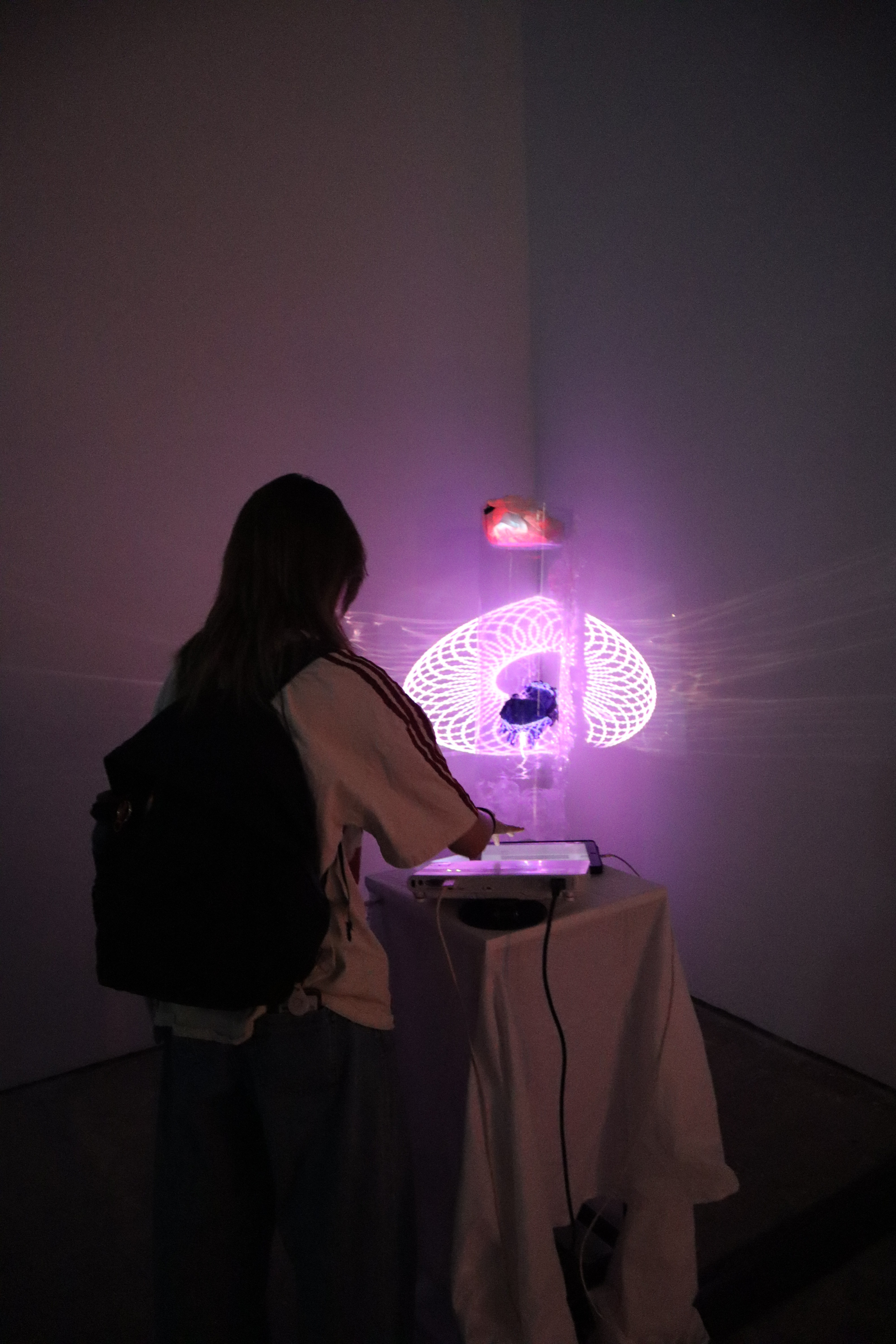
I’m fine is an audio-responsive installation that transforms music into light. Through real-time analysis of intensity, frequency and rhythm, it drives projections to flow within a brain-shaped vessel and spread out into the space. These branching, pulsating visual effects evoke images of neural pathways or capillaries, guiding the audience to observe, from a detached third-person perspective, how sound directs attention and emotion.

The Problems
During the development ofI’m fine, I encountered three main types of challenges:
First, debugging the hardware and interaction logic was time-consuming, mainly due to unstable sensors and discrepancies between the components provided by the university and their documentation.
Second, I needed to translate abstract inputs, such as sound and collision, into clear and perceptible visual feedback.
Third, during the exhibition setup, the projector was placed too far from the wall, causing the image to be oversized and impossible to scale down manually. As a result, the artwork was temporarily deemed unfit for display.

How I Solved Them
To minimize rework, I documented the circuit layouts in Tinkercad and Fritzing, then tested each component independently to identify hardware and wiring issues.
At the same time, I shifted the interaction focus from motion and motors, which were harder to implement reliably, to light-based interaction, offering faster responses and more noticeable changes as a key improvement for the second version.
Regarding the exhibition challenge, I persisted in pushing the project forward. By adjusting the positioning in conjunction with another artwork to resolve the projection scale, I ensured its successful display at Interplay.
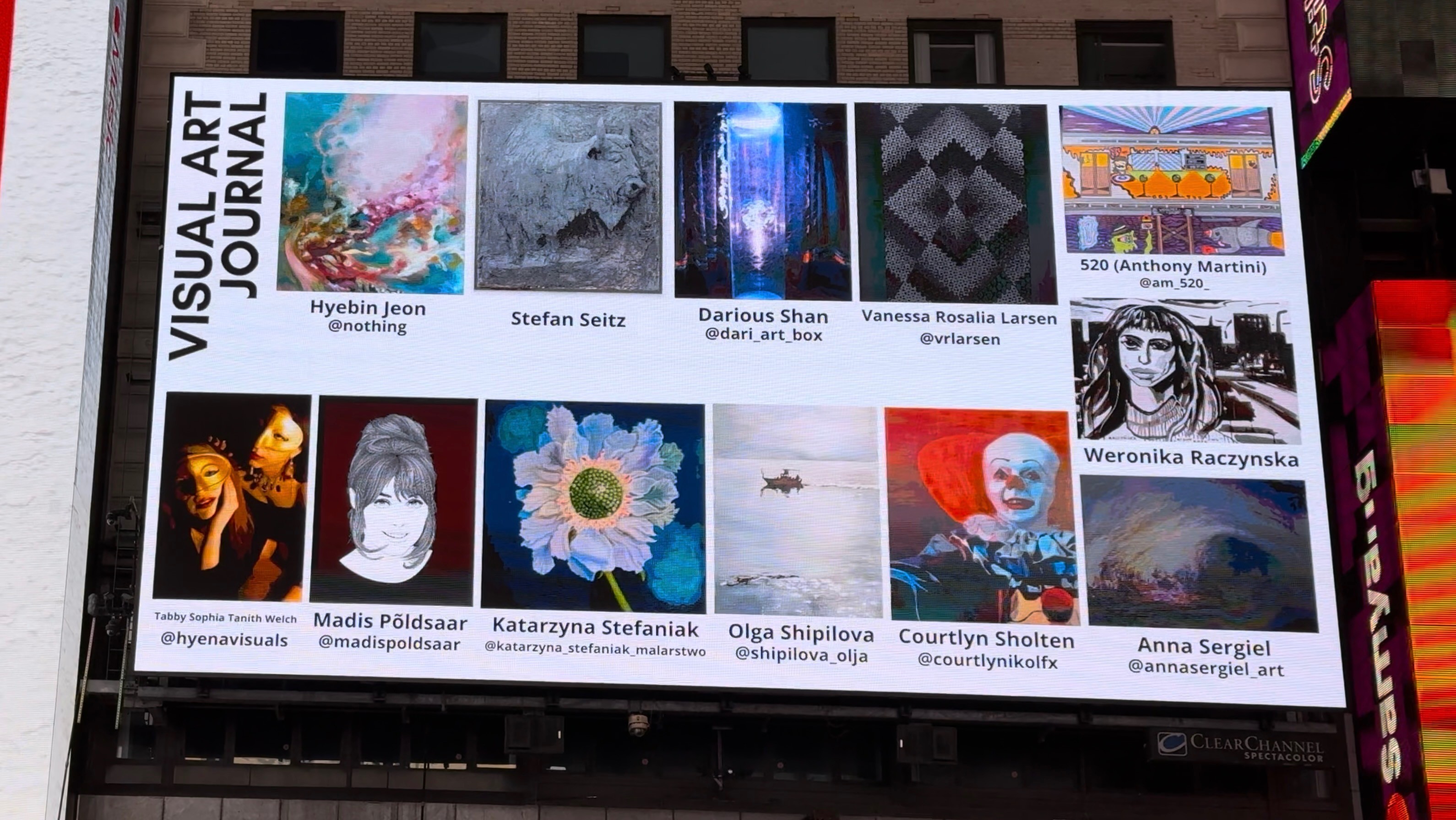
Subsequently, I continued organizing the project into shareable images and media content. The project was later published in Visual Art Journal and featured on a digital billboard in Times Square, New York.
Future Development
For future development, I hope to refine the installation into a more polished and exhibition-ready object. The current setup is not easy to transport, so I plan to redesign the structure with a lighter, modular casing and cleaner internal wiring, making it safer, more durable, and easier to assemble on site. I also want to expand the visual language. At the moment the work relies on a single pattern, but future versions could include multiple visualization modes with different neural textures, branching behaviors, and rhythmic motifs, so the piece can shift between states and better reflect the complexity of sound and emotion over time.

